Key decisions, plans, meetings and public appearances since October 2022. Each entry gives its date and category and cites a published source.
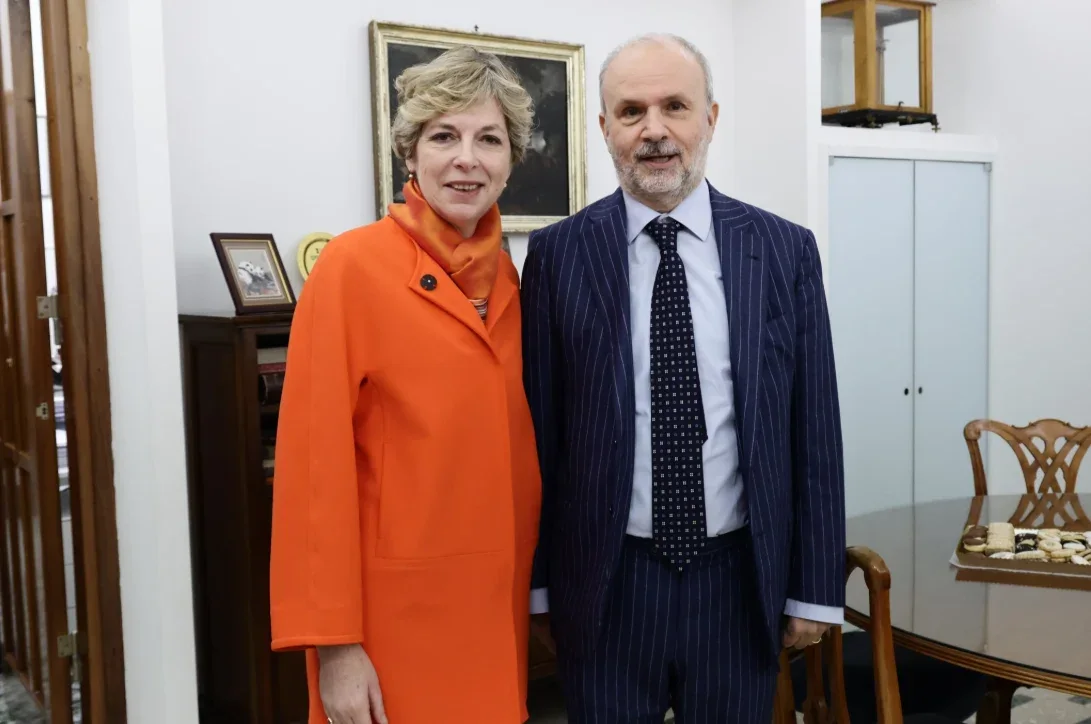
During an institutional meeting in a formal office.
2026
2026
Healthcare
New essential levels of care: “the same across the whole country”
On Rai 1's UnoMattina, the Minister announced that the decrees updating the LEA had been published, about 800 changes covering new services, therapies, diagnostic tests, neonatal and cancer screenings and prosthetic devices, backed by more than €150 million. It is the first revision since 2017. He also said more than 1,200 Community Houses had opened and that AGENAS data showed first signs of improvement on waiting lists.
Speaking at the national festival of the civil economy, the Minister said that more resources had gone to the health service but that the system also needs the capacity to plan and manage them well.
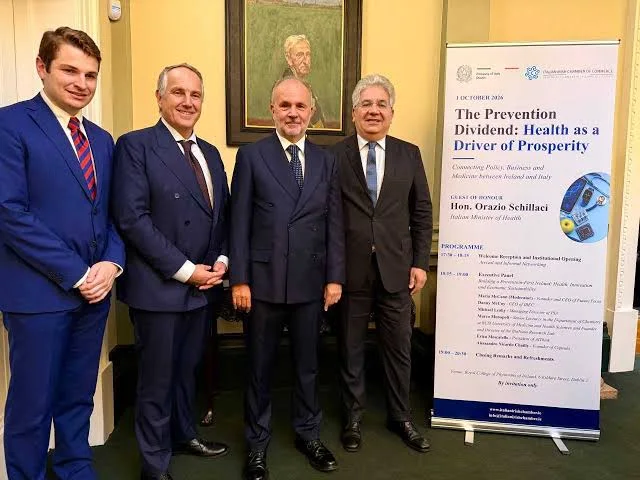
Guest of honour at “The Prevention Dividend” in Dublin
“The Prevention Dividend: Health as a Driver of Prosperity — Connecting Policy, Business and Medicine between Ireland and Italy” was held at the Royal College of Physicians of Ireland, promoted with the Italian Embassy in Dublin and the Italian-Irish Chamber of Commerce. The programme included an executive panel on building a prevention-first approach linking health innovation and economic sustainability.
Source: event programme, photographed at the venue. Related: Prevention
Dublin, 1 October 2026.
Prevention
Prevention spending and EU fiscal flexibility
In Il Sole 24 Ore, the Minister repeated his proposal to exclude prevention spending from EU deficit calculations, as already happens for defence and energy: "I remain convinced that expenditure on prevention should be excluded from the deficit."
Mental health plan: funds allocated to the regions
The Minister said he had signed the decree allocating the resources of the National Action Plan for Mental Health to the regions: €80 million for 2026, €85 million for 2027 and €90 million for 2028, then €30 million a year from 2029, plus €30 million a year for staff. In the Senate's Sala Koch he opened a discussion on implementing the plan, naming prevention, early care, women and young people as priorities.
The State–Regions Conference approved the new five-year Pandemic Plan, a single strategy for respiratory pandemics with different epidemiological characteristics. The Minister said the government had allocated more than €1.1 billion to strengthen prevention, laboratory capacity and strategic stockpiles.
National Action Plan for Mental Health 2025–2030 approved
The Unified Conference approved the plan, the first new national strategy for mental health in more than a decade. "Mental health returns to the political agenda," the Minister said. The plan introduces the primary-care psychologist and reorganises community services.
Interview: prevention, recruitment and regional deadlines
In Il Sole 24 Ore the Minister said that "every euro invested" in prevention "produces three", called the 7,000 new positions in the budget "the first important signal", described delays in diagnostic tests as "absolutely unacceptable" and said he was ready to use substitutive powers where regions failed to open Community Houses on time.
2026 budget: National Health Fund towards €143 billion
Presenting the health measures of the 2026 budget, the Minister announced €2.4 billion in additional financing, bringing the National Health Fund to about €143 billion in 2026 from about €126 billion in 2022. He named personnel, waiting lists and prevention as priorities. Commentators disputed how much of the increase was new money.
The Minister described the reorganisation of the Italian Medicines Agency as "a fundamental pillar of Italian public health" and reported faster procedures after its two committees were merged into one.
SItI national congress: more investment in prevention
Addressing the congress of the Italian Society of Hygiene, Preventive Medicine and Public Health (SItI), the Minister called for higher investment in prevention.
The Minister chaired the G7 health ministers under the Italian presidency. Topics included the global health architecture, pandemic preparedness, healthy ageing through prevention and innovation, and One Health with a focus on antimicrobial resistance. Italy committed $21 million to research on new antibiotics.
Decree-Law 73/2024, with urgent measures to cut waiting times, came into force on 8 June. It created a national waiting-list platform and a body to verify how care is delivered. It was converted into Law 107 of 29 July 2024.
Meeting with Bulgarian Health Minister Prof. Hristo Hinkov at the Bulgarian Ministry of Health to discuss a joint action plan on cancer prevention, with the Italian Chamber of Commerce in Bulgaria and the Italian Embassy.
The European Commission approved Italy's revised recovery plan. Health targets were reset at 1,038 Community Houses, 307 Community Hospitals and 480 territorial operations centres, reflecting higher costs and longer timelines.
At the 78th UN General Assembly, the Minister restated Italy's commitment to universal health coverage, primary care and support for fragile countries' health systems.
Orazio Schillaci, until then Rector of the University of Rome Tor Vergata, was sworn in as Minister of Health in the government led by Giorgia Meloni. "It is truly a great honour to be able to serve the Nation," he said.
Not every photograph can be tied to a specific dated event. Those that cannot are shown here and in the Gallery with descriptive captions only, so that no image is attached to an event it may not belong to.
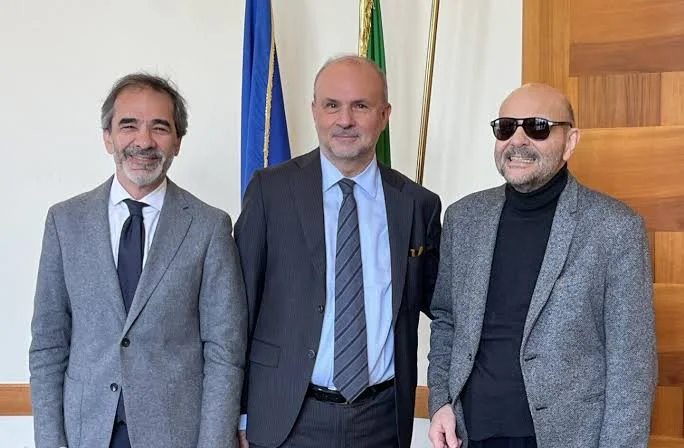
With guests in an office with the Italian and European flags.