National health planning
Setting national objectives through the National Health Plan and sector plans such as the National Prevention Plan and the Pandemic Plan.
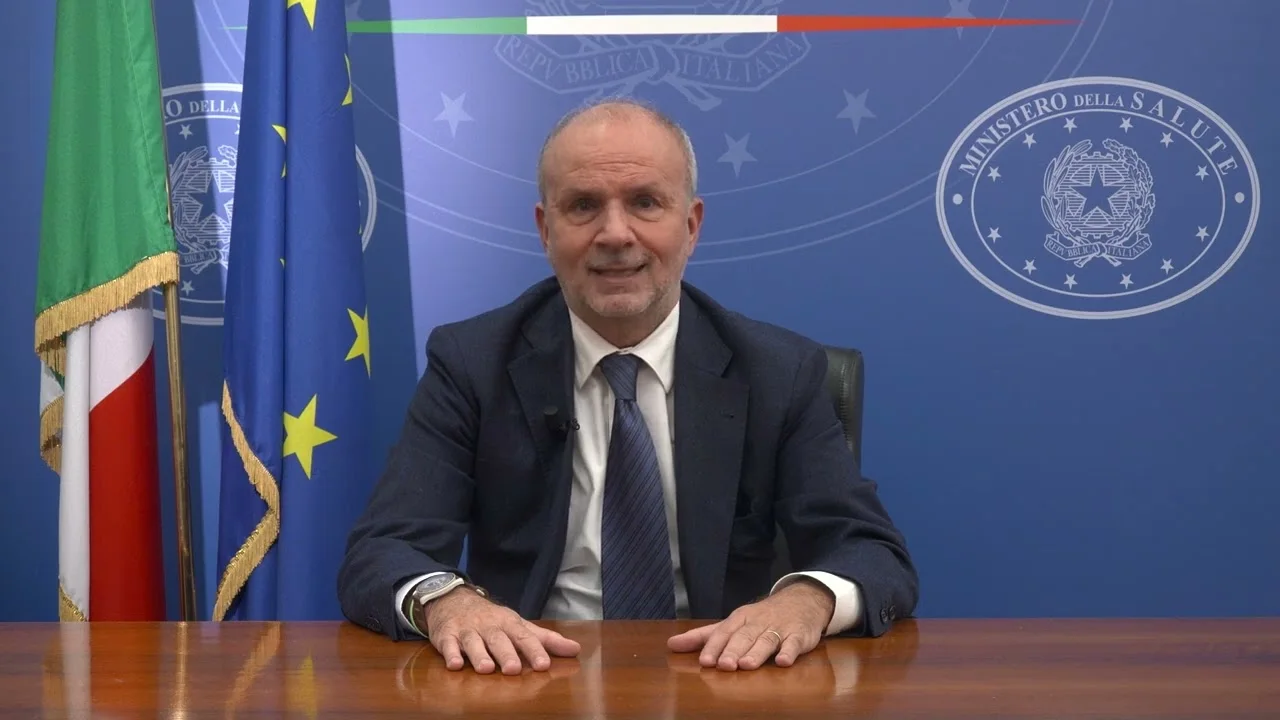
Ministero della Salute · Since 22 October 2022
Orazio Schillaci leads the Italian Ministry of Health in the government headed by Giorgia Meloni. This page sets out how he was appointed, what the Ministry is responsible for, and the main policy areas of his mandate. Measures that have been adopted are kept separate from those still being implemented.
The appointment
The list of ministers of the new government was announced on 21 October 2022. Orazio Schillaci, then Rector of the University of Rome Tor Vergata, was named Minister of Health, and the government was sworn in at the Quirinale Palace the following day, 22 October 2022.
He was not affiliated with any party. Italian governments have often included independent experts, and the health ministry is a portfolio where clinical and scientific credibility counts for a great deal. He succeeded Roberto Speranza, minister during the COVID-19 pandemic. The two ministers held a formal handover ceremony at the Ministry of Health.
Schillaci still holds the office at the date of this website's latest update (October 2026).
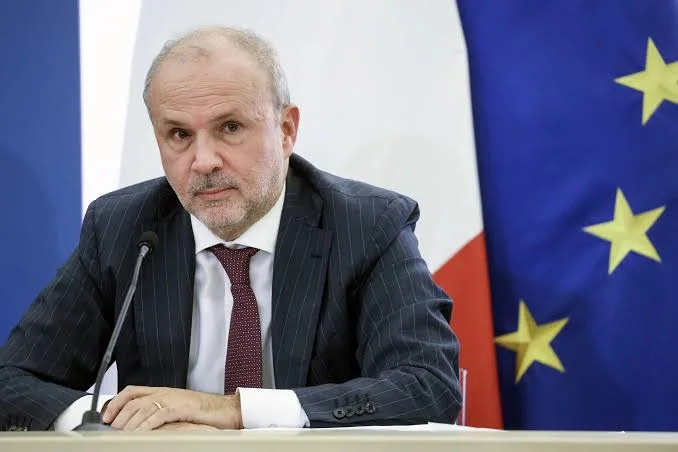
Institutional responsibilities
Since the 2001 reform of Title V of the Constitution, health has been a responsibility shared between the State and the regions. The State sets the framework and guarantees uniform rights. The regions organise and deliver care through their local health authorities and hospital trusts.
Setting national objectives through the National Health Plan and sector plans such as the National Prevention Plan and the Pandemic Plan.
Defining, with the regions, the Livelli Essenziali di Assistenza (LEA), the services every resident is entitled to, and monitoring how they are delivered.
Working with the Ministry of Economy and Finance on the size of the National Health Fund and the rules for distributing it between regions.
Vaccination policy, screening programmes, surveillance of infectious diseases, food safety and veterinary public health.
Oversight of pharmaceutical policy, exercised largely through the Italian Medicines Agency (AIFA), and the regulation of medical devices.
Rules for the health professions, workforce planning with the regions and universities, and oversight of professional bodies.
Supervision of national bodies including the Istituto Superiore di Sanità, AGENAS (the national agency for regional health services) and AIFA.
Planning for health emergencies, including pandemic preparedness and the strategic stockpiles.
Representing Italy in the EU Council (EPSCO), at the WHO, in the G7 and G20, and in bilateral health cooperation.
Policy areas of the mandate
The main fields in which the Ministry has acted since 2022. Each links to the page that covers it in depth.
Shortages of doctors and nurses, particularly in emergency medicine and in some regions, have been a constant theme. The 2026 budget, according to the Minister, provides for around 7,000 new hires, which he called "the first important signal". Medical school admission has been reformed so that, from the 2025/26 academic year, an open first semester replaces the old entrance test. That reform was led by the Ministry of University and Research. Read more.
Decree-Law 73 of 7 June 2024, converted into Law 107 of 29 July 2024, created a national platform for monitoring waiting lists and a body to check how care is delivered. The Minister has called delays in diagnostics "absolutely unacceptable" while warning that the problem "cannot be solved overnight". Read more.
The PNRR funds a new network of Community Houses, Community Hospitals and territorial operations centres. In October 2026 the Minister said that more than 1,200 Community Houses had opened and that the PNRR targets had been reached. Read more.
The Minister calls prevention an investment rather than a cost, and argues that prevention spending should be excluded from EU deficit calculations. Read more.
The update of the LEA, published in autumn 2026, adds about 800 services, therapies, tests and devices, including oncology treatments and neonatal screening. It is the first revision since 2017. Read more.
The National Action Plan for Mental Health 2025–2030 was approved by the Unified Conference, with dedicated funding and the introduction of a primary-care psychologist. Read more.
The reorganisation of AIFA merged its two evaluation committees into a single Scientific and Economic Committee to speed up decisions on medicines. In December 2024 the Minister called pharmaceutical innovation "perhaps one of the biggest challenges facing our health". Read more.
Implementation of the Electronic Health Record 2.0 and the national telemedicine platform, coordinated with AGENAS and funded through the PNRR. Read more.
The Pandemic Plan 2025–2029, approved by the State–Regions Conference in April 2026, is backed by more than €1.1 billion for prevention, laboratory capacity and strategic stockpiles, according to the Minister. Read more.
Outcomes and access vary widely between regions, especially between north and south. "The right to healthcare must be truly guaranteed to everyone; it cannot depend on one's place of residence," the Minister said in June 2026. Read more.
The Minister has said he is willing to use the State's substitutive powers where regions miss deadlines for opening Community Houses. Read more.
The 2024 G7 health track under the Italian presidency, work with the WHO, the UN and the OECD, and bilateral cooperation. Read more.
Key acts & milestones
Takes office as Minister of Health.
The European Commission approves Italy's revised recovery plan, including new health targets: 1,038 Community Houses, 307 Community Hospitals and 480 territorial operations centres.
Decree-Law 73/2024 on cutting waiting times, converted by Law 107/2024.
Chairs the G7 health ministers under the Italian presidency.
Message to the Italian Medicines Agency on its structural reform.
National Action Plan for Mental Health 2025–2030 approved by the Unified Conference.
State–Regions Conference approves the Pandemic Plan 2025–2029.
Publication of the updated essential levels of care.
Each milestone is documented in Activities & News, with links to the original sources.