Healthcare innovation
Modernising care, one system at a time.
Digital records, telemedicine, interoperable data and faster access to new medicines are where health policy turns into infrastructure. This page separates programmes already under way from developments that are still possibilities.
Status map
What exists, and what is coming.
The distinction matters. Programmes on the left are in place or being rolled out under adopted rules and funding. Developments on the right are directions the field is moving in, not commitments with fixed dates.
Electronic Health Record 2.0
The Fascicolo Sanitario Elettronico gathers each citizen's clinical documents: reports, prescriptions, discharge letters and vaccinations. National guidelines for version 2.0 require structured data and common interoperability standards, so that information follows the patient between regions, under the supervision of AGENAS.
National telemedicine platform
A national infrastructure connected to regional systems, designed to guarantee common standards for televisits, teleconsultation, telemonitoring and telecare, and to integrate with the FSE 2.0 and the national health data ecosystem.
Technological modernisation of hospitals
The health mission of the PNRR finances the replacement of obsolete large equipment (CT and MRI scanners, linear accelerators, angiography systems) and the digitalisation of hospital departments.
Faster access to medicines
The reorganised Italian Medicines Agency now evaluates the scientific and economic aspects of new medicines in a single committee. In December 2024 the Minister reported a 40% reduction in dossier submission deadlines and the completion of 133 reimbursement applications.
National waiting-list platform
Established by the 2024 waiting-lists decree to monitor and compare waiting times across regions using shared data.
Artificial intelligence in diagnostics
Imaging is one of the fields where AI tools are most advanced, for example in prioritising scans or flagging anomalies. Using them in routine practice depends on clinical validation, regulation under the EU AI Act and medical device rules, and clinicians' trust. These are possibilities, not current national programmes.
Health data for prevention and research
Structured FSE 2.0 data could support population health management, earlier identification of risk and research, within the strict limits of data-protection law and the coming European Health Data Space.
Remote monitoring at scale
Monitoring chronic patients at home could reduce hospital admissions as the population ages. It depends on community services being staffed and on patients' digital skills.
Precision and molecular medicine
Theranostics, the use of the same molecular target to image and to treat disease, is an expanding field of nuclear medicine, the Minister's own discipline. Its spread will depend on evidence, cost and reimbursement decisions.
Architecture
How the pieces connect.
Digital health only works if systems exchange data. Italy's model links regional services through national platforms, so that a report written in one region can be read in another and aggregated data can inform national policy.
Interoperability is therefore the foundation of digital health, not a technical detail. Without common standards, telemedicine and data-driven prevention cannot scale beyond pilot projects.
Innovation with guardrails.
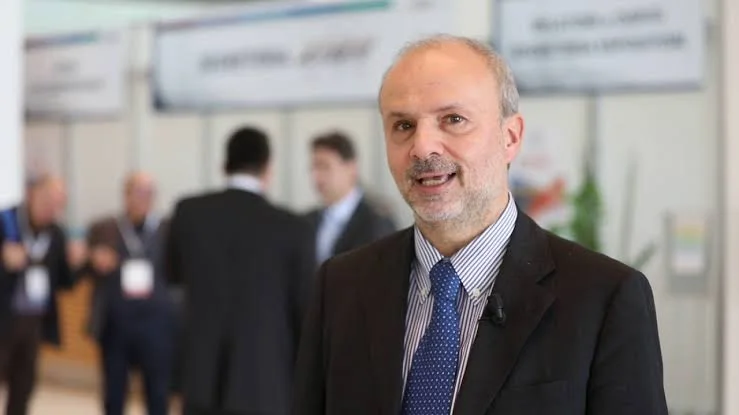
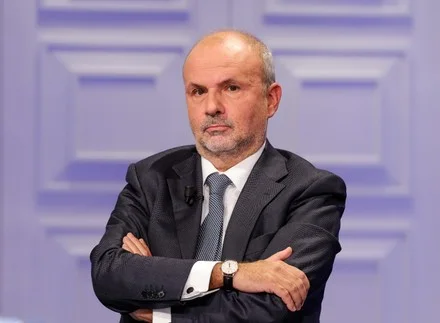
Speaking on Rai 1's UnoMattina in October 2026, the Minister said there are "continuous innovations in the world of healthcare and scientific research". That was his reason for updating the essential levels of care so that new treatments and tests reach patients in every region. He presents innovation as part of the LEA rather than an optional extra, and as something that must remain affordable and fairly distributed.
He made the same point to AIFA in December 2024, describing pharmaceutical innovation as a balance between rewarding new treatments and keeping the system economically sustainable.