Medical & academic career

The physician behind the portfolio.

Before he was a minister, Orazio Schillaci was a nuclear medicine specialist: a doctor whose work is to make the body's chemistry visible. This page follows his medical training, his academic appointments and the leadership roles that took him from the reading room to the Rector's office.

Plate ITor Vergata
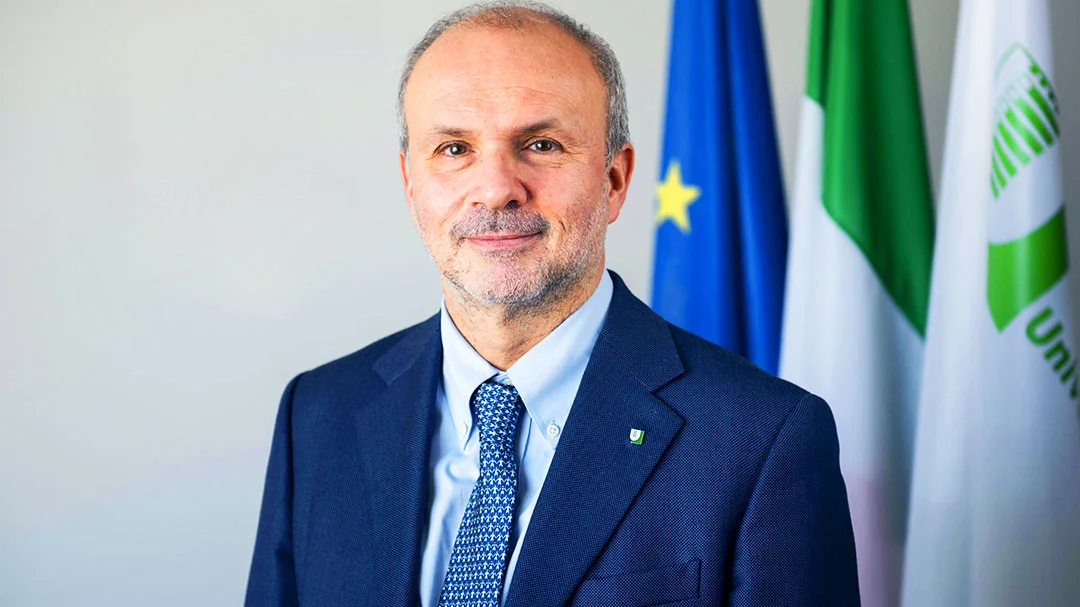
Orazio Schillaci smiling in a navy suit in front of the European Union flag, the Italian flag and a green institutional banner

Orazio Schillaci in front of the European, Italian and institutional flags.

I · Training

A Roman medical education.

Schillaci trained entirely within Rome's public university system. He graduated in Medicine and Surgery from Sapienza University of Rome in 1990 and stayed at Sapienza for specialist training in nuclear medicine, completing it in 1994. In Italy, specialisation is a salaried, multi-year residency within a university hospital, ending in a diploma that qualifies the physician to practise the specialty in the National Health Service.

He then took a research doctorate, completed in 2000, in radioisotopic functional imaging. The title describes his scientific field: radioisotopes, unstable atoms that emit detectable radiation, attached to biologically active molecules to follow processes such as glucose metabolism, blood flow or receptor binding inside the living body.

In 2009, by then a full professor, he obtained a further specialisation in radiodiagnostics at Tor Vergata. Imaging was changing: PET and SPECT scanners were increasingly combined with CT and MRI, and practitioners needed both functional and anatomical expertise.
1990Degree in Medicine and SurgerySapienza University of Rome
1994Specialisation in Nuclear MedicineSapienza University of Rome
2000PhD, Radioisotopic Functional ImagingSapienza University of Rome
2009Specialisation in RadiodiagnosticsUniversity of Rome Tor Vergata
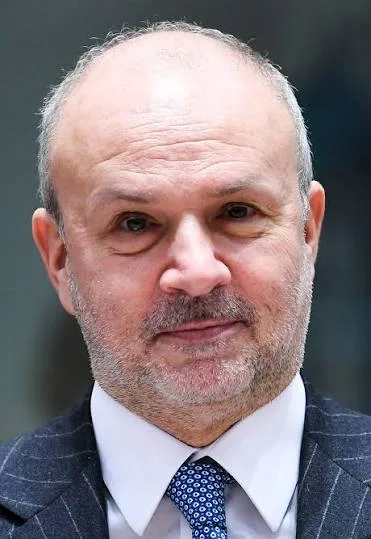
Head-and-shoulders portrait of Orazio Schillaci smiling, in a dark jacket, white shirt and blue patterned tie

Portrait of Orazio Schillaci.

II · The discipline

What nuclear medicine does.

Conventional radiology shows anatomy. Nuclear medicine shows function. A patient receives a small quantity of a radiopharmaceutical, a tracer designed to collect where a particular biological process is active. Cameras then detect the radiation and reconstruct where the tracer has gone.

Institutional profiles of Schillaci's research list three areas: nuclear medicine, molecular imaging and image fusion. The diagram shows how these fit together in the hybrid scanners now standard in oncology, cardiology and neurology.

  • PET

    Positron emission tomography. Detects paired photons from positron-emitting tracers such as FDG, a glucose analogue taken up by metabolically active tumours.

  • SPECT

    Single-photon emission computed tomography. Images gamma-emitting tracers, widely used for heart perfusion, bone and brain studies.

  • CT / MRI

    Anatomical imaging that provides the structural map.

  • Fusion

    Registration of functional and anatomical images, locating the biological signal precisely in the body.

Diagram of hybrid image fusion A functional image from PET or SPECT and an anatomical image from CT or MRI are combined into a single fused image that locates the tracer signal anatomically. FUNCTION · PET / SPECT ANATOMY · CT / MRI FUSION · PET/CT, SPECT/CT
Fig. 1. Schematic of image fusion. Illustration by this site, not clinical data.

III · Appointments

From researcher to Rector.

Twenty years at one university, moving through every level of academic responsibility: teaching, specialist training, faculty governance and finally the leadership of the whole institution.

Until 2001University researcherUniversity of L'Aquila
2001Associate professor of nuclear medicineUniversity of Rome Tor Vergata. Italian sources also date his leadership of the nuclear medicine service at Policlinico Tor Vergata from this year.
2006–2009Expert member, Consiglio Superiore di SanitàThe Higher Health Council, the Ministry of Health's senior technical and scientific advisory body.
2007Full professor of nuclear medicineUniversity of Rome Tor Vergata
2008Director, school of specialisation in nuclear medicineResponsible for postgraduate residency training in the discipline.
2011–2019Vice-president, then president, Faculty of Medicine and SurgeryUniversity of Rome Tor Vergata
2018Director, onco-haematology departmentPoliclinico Tor Vergata, as recorded in Italian sources.
2019–2022RectorUniversity of Rome Tor Vergata, from 1 November 2019 to 22 October 2022.
2020Scientific committee, Istituto Superiore di SanitàAppointed by Health Minister Roberto Speranza.

IV · Medical education

Training the next generation.

Directing a school of specialisation means running a residency programme: setting curricula, supervising clinical rotations and certifying that young doctors can practise independently. Nuclear medicine residents must master radiation protection, radiopharmacy, instrumentation and interpretation alongside general clinical medicine.

As president of the Faculty of Medicine and Surgery, Schillaci was responsible for degree courses in medicine and in the health professions such as nursing, physiotherapy and radiographic technology. These are the programmes that supply the National Health Service with its workforce. The question of how many doctors and nurses Italy trains, and how, later became one of the central issues of his ministry. See the health workforce.

V · Scientific output

A publication record in imaging.

Speaker profiles prepared for the OECD Health Ministerial Meeting describe over 350 peer-reviewed publications and membership of the editorial boards of scientific journals. Italian press profiles at the time of his appointment cited more than 220 articles indexed in PubMed. The figures differ because they count different things. Both describe a sustained output centred on nuclear medicine and molecular imaging.

His publications can be consulted directly in bibliographic databases such as PubMed. This site does not list individual papers, because it does not reproduce bibliographic claims it cannot check independently. See Research & Science.

VI · Relevance

Why a clinical-academic background matters in a health ministry.

Reading evidence

A researcher is used to judging the quality of evidence: study design, sample sizes, the gap between a promising result and a proven one. Health policy constantly faces those questions, whether on screening programmes, new drugs or vaccination strategy.

Knowing the hospital

Two decades in a university hospital give direct knowledge of the pressures the ministry tries to relieve: equipment budgets, staffing rotas, waiting times for diagnostics and the interface between hospital and community care.

Governing institutions

Leading a faculty and then a university of tens of thousands of students is a lesson in managing large public institutions, negotiating budgets and working with regional and national authorities.